Learn about our care model
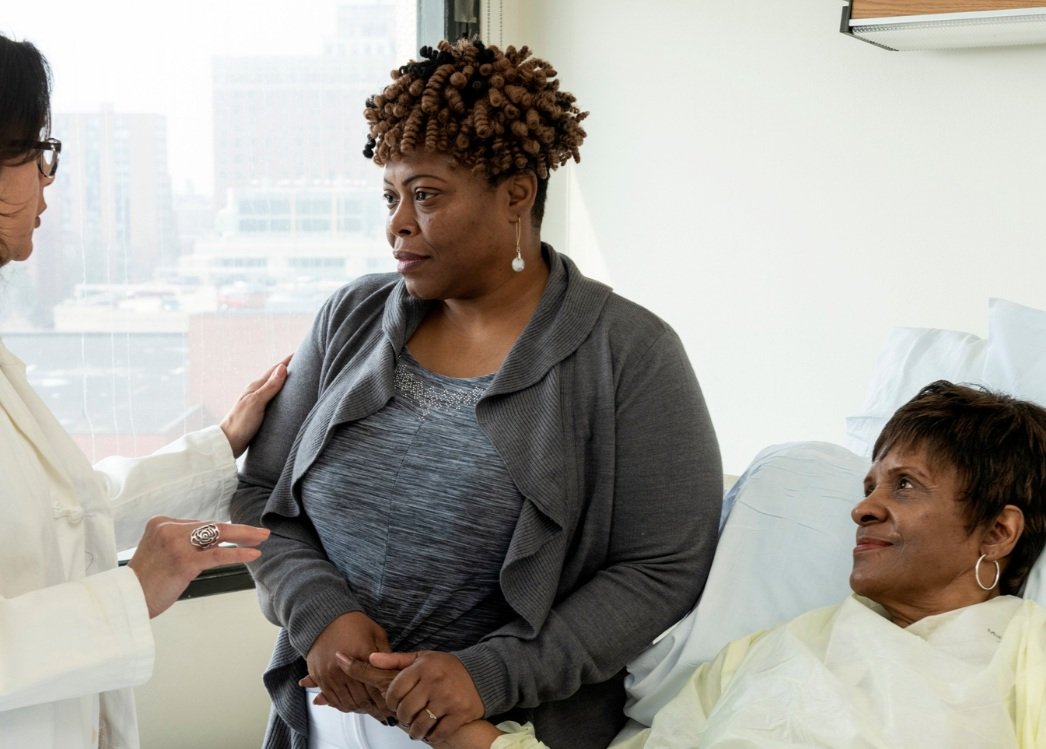
Since 2008, CHaSCI has innovated to develop effective models of care that leverage social workers and community health workers to improve quality of care and ultimately improve health and health equity.
The CHaSCI care model leverages social workers and other social care providers to follow a flexible yet standardized protocol to assess and address complex psychosocial and functional issues impacting people’s care plan adherence, health status, and quality of life. They leverage care management and therapeutic techniques to increase patient activation, engage home- and community-based service providers, and support medical stability after hospitalizations.
Outcomes & publications
As demonstrated by our impact findings, integrating medical and social care contributes to many positive outcomes:
Increased engagement with primary care
Lower hospitalization and readmission rates
Decreased depressive symptoms and lower stress for patients & family caregivers
Reduced stress among healthcare providers
-
Greene, R., & Cummings, E. (2023). Transitioning from Hospital to Home: Resilience-Enhancing Skills for Health Care Social Workers. In Resilience Enhancement in Social Work Practice: Anti-Oppressive Social Work Skills and Techniques (pp. 81-97). Cham: Springer Nature Switzerland.
Rizzo, V. M., Rowe, J. M., Han, W., Kang, S. Y., Ewald, B., Rothschild, S. K., & Golden, R. (2022). The effect of the Ambulatory Integration of the Medical and Social (AIMS) model on health risk and depression. Social Work in Health Care, 61(5), 353-368.
Rowe, J. M., Jang, E., Rizzo, V. M., Kim, Y., Ewald, B., Vail, M. R., & Drechsler, K. (2021). Supporting free clinic patients’ social needs with MSW interns: A pilot study. Social Work in Health Care, 60(4), 334-353.
Rowe, J. M., Rizzo, V. M., Kang, S. Y., Kukowski, R., Ewald, B., Newman, M., & Golden, R. (2019). Time contribution of social workers in care management: Value for older adults. Professional Case Management, 24(6), 306-316.
Xiang, X., Zuverink, A., Rosenberg, W., & Mahmoudi, E. (2019). Social work-based transitional care intervention for super utilizers of medical care: a retrospective analysis of the bridge model for super utilizers. Social Work in Health Care, 58(1), 126-141.
Rowe, J., Rizzo, V. M., Guthrie, D., Vail, M. R., Kang, S. Y., & Golden, R. (2019). The electronic health record: Documenting the unique contributions of social workers. Health & Social Work, 44(2), 123-128.
Xiang, X., Robinson-Lane, S. G., Rosenberg, W., & Alvarez, R. (2018). Implementing and sustaining evidence-based practice in health care: The Bridge Model experience. Journal of gerontological social work, 61(3), 280-294.
Alvarez, R., Ginsburg, J., Grabowski, J., Post, S., & Rosenberg, W. (2016). The social work role in reducing 30-day readmissions: the effectiveness of the bridge model of transitional care. Journal of Gerontological Social Work, 59(3), 222-227.
Rowe, J. M., Rizzo, V. M., Shier Kricke, G., Krajci, K., Rodriguez-Morales, G., Newman, M., & Golden, R. (2016). The ambulatory integration of the medical and social (AIMS) model: A retrospective evaluation. Social Work in Health Care, 55(5), 347-361.
Rizzo, V. M., Rowe, J. M., Shier Kricke, G., Krajci, K., & Golden, R. (2016). AIMS: A care coordination model to improve patient health outcomes. Health & Social Work, 41(3), 191-195.
Altfeld, S., Pavle, K., Rosenberg, W., & Shure, I. (2012). Integrating care across settings: The Illinois transitional care consortium's bridge model. Generations, 36(4), 98-101.
Fabbre, V. D., Buffington, A. S., Altfeld, S. J., Shier, G. E., & Golden, R. L. (2011). Social work and transitions of care: Observations from an intervention for older adults. Journal of Gerontological Social Work, 54(6), 615-626.
Altfeld, S. J., Shier, G. E., Rooney, M., Johnson, T. J., Golden, R. L., Karavolos, K., ... & Perry, A. J. (2013). Effects of an enhanced discharge planning intervention for hospitalized older adults: a randomized trial. The Gerontologist, 53(3), 430-440.
Background
The CHaSCI Care Model is grounded in over 15 years of experience developing, testing, and disseminating two social work-led care management models:
The Bridge Model of transitional care
The AIMS Model (Ambulatory Integration of Medical and Social)